

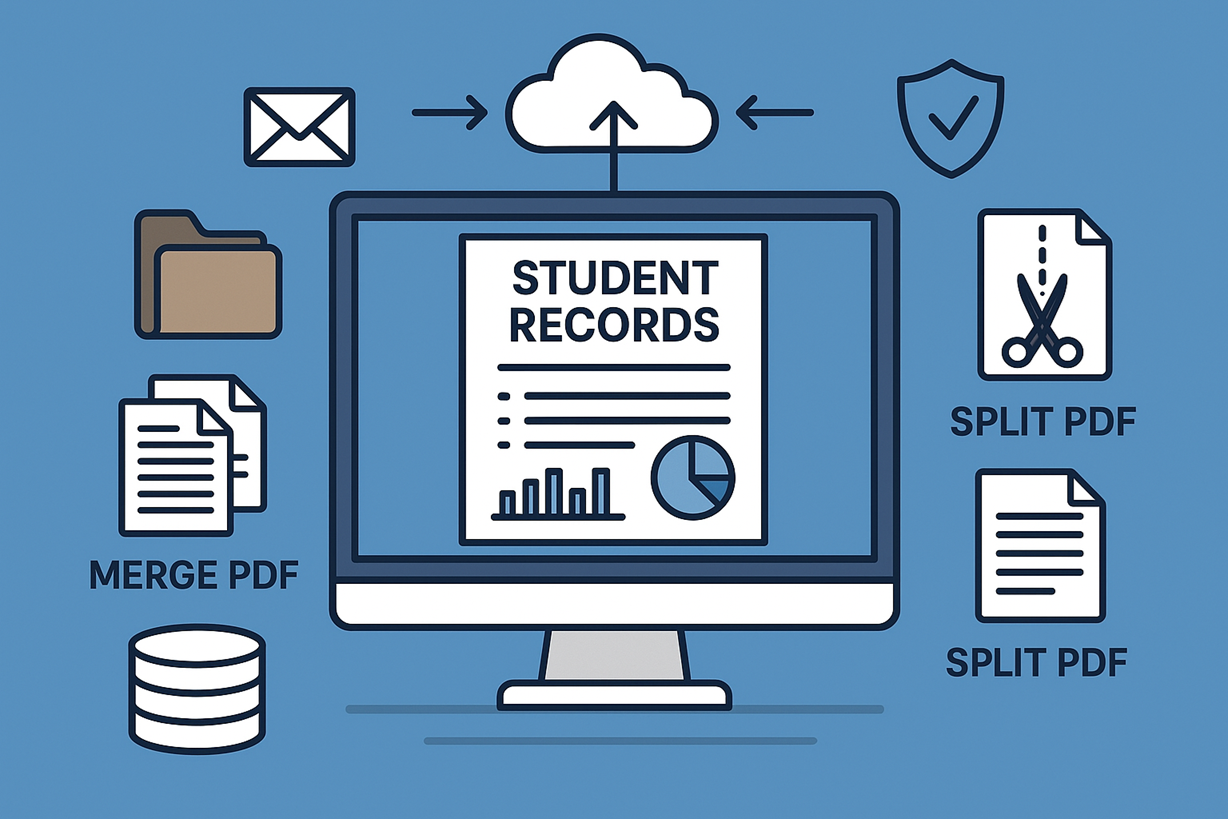
Managing student records has become one of the most complex responsibilities in modern education. As schools transition deeper into the digital era, nearly every document—transcripts, attendance reports, assessments, medical forms, parent communications, and administrative files—now exists in PDF format. This shift improves accessibility but also increases the need for structured, secure, and organized digital workflows. Many schools rely on tools found on platforms such as PDFmigo.com to manage files efficiently, especially when large volumes of documents must be combined or separated.
The Digital Transformation of School Records
Schools once depended entirely on paper folders and filing cabinets. Today, most documents are scanned, uploaded, and archived digitally. PDFs have become the universal standard because they preserve formatting, lock content, and remain consistent across devices. Whether a teacher is preparing a progress report or an administrator is storing immunization records, PDF files ensure that information stays readable and tamper-proof.
With each student generating dozens of documents every semester, schools must maintain clear organizational systems. Counselors, teachers, and administrators often manage thousands of PDF files across various categories, which makes digital structure essential for smooth operation.
Why Organization Matters More Than Ever
A poorly managed digital archive can lead to lost documents, errors during audits, delayed transcript requests, and confusion during meetings with parents. Clean digital records also help educators quickly understand a student’s academic history, behavioral trends, or progress toward graduation requirements.
To keep information clear and consistent, schools often consolidate related files into one professionally formatted packet. This is especially important when sending documents to colleges, funding agencies, or external institutions. Tools that allow staff to merge PDF files help create a single polished document, making it easier for recipients to read and reducing the chance of misplaced pages.
Extracting the Right Information
Not all pages within a large PDF are relevant to a student’s record. For example, standardized test reports may include sections that a school does not need, or a scanned document may contain blank or duplicated pages. Instead of saving the full file, staff can extract only the necessary pages through tools that allow them to Split PDF.
This helps maintain cleaner archives, reduces digital clutter, and ensures that each student’s record contains only accurate and relevant information. Better organization also makes future retrieval much faster for teachers and administrators.
Security, Privacy, and Compliance
Student information is highly sensitive. Schools must comply with privacy regulations such as FERPA, which requires secure storage and restricted access to educational records. PDF files support encryption, password protection, and locked editing, making them ideal for medical files, evaluations, disciplinary reports, or legal documents.
Digital record-keeping also makes it easier for administrators to track who accessed a document, when changes were made, and whether the file remains securely stored.
Cloud Storage and Instant Access
Most schools now use cloud-based systems such as Google Workspace for Education, Microsoft 365, or specialized student information systems. These platforms allow instant access to documents from any approved device. Teachers can easily view attendance history during parent conferences, counselors can check transcripts while planning schedules, and administrators can generate reports during audits.
Even with cloud technology, good file organization remains necessary. Files must be clearly named, properly categorized, and stored in predictable folders. Merged and split PDFs help maintain these standards.
Clearer Communication With Families
Parents often request full academic histories or specific documents such as evaluations or progress reports. Instead of sending many separate attachments, schools can create a polished PDF packet that includes everything parents need. This makes the information easier to understand and helps prevent misunderstandings.
When parents submit large multi-page files—such as medical evaluations or outside assessments—school staff can extract the relevant sections and attach them to the correct categories in the student’s digital file.
Supporting Personalized Learning
Organized digital documentation helps educators identify patterns, understand student needs, and design personalized learning plans. When records are easy to access, teachers spend less time searching for information and more time using it to support students.
Good documentation also contributes to stronger intervention programs, improved academic planning, and better communication among staff.
Digitizing Archived Paper Records
Many older student files still exist on paper. Schools increasingly scan these documents into PDF format for long-term preservation. However, scans often include rotated pages, duplicates, or blank sheets. Tools that can quickly reorganize or separate pages help ensure that the digital version is clean and professional before it is added to the archive.
PDF remains one of the most durable and universally accepted formats for long-term educational storage.
Looking Ahead: The Future of Student Record Systems
As technology evolves, schools are adopting automation, artificial intelligence, and machine learning to manage student records more efficiently. Future systems may automatically categorize documents, identify key information, or detect missing files. But even with more advanced systems, the foundation remains the same: clean, well-organized PDF files that are easy to merge, split, and maintain.
Conclusion
Student records play a critical role in education, affecting everything from academic planning to compliance and parent communication. With the increasing volume of digital documents in schools, efficient PDF management has become essential. Using tools such as merge PDF and Split PDF helps schools maintain accurate, secure, and well-organized files that support better outcomes for students and smoother operations for educators.
